OpenClaw’s Introduction
On March 16, at the GTC conference, Jensen Huang stood on stage wearing a leather jacket, heralding OpenClaw as a personal AI operating system. While Mac and Windows serve as operating systems for personal computers, OpenClaw aims to be the operating system for personal AI.
As the audience erupted in applause, few could have predicted that this “fastest-growing open-source project in human history” would collapse in just five weeks.

Frequent Updates Lead to Instability
Founder Peter Steinberger, although recruited by OpenAI in February, reportedly still has ample time to continue leading OpenClaw. Like Peter, many of the other dozens of maintainers work on OpenClaw in their spare time while managing their own startups.
This group of volunteers is carrying a project that has amassed 360,000 stars on GitHub.
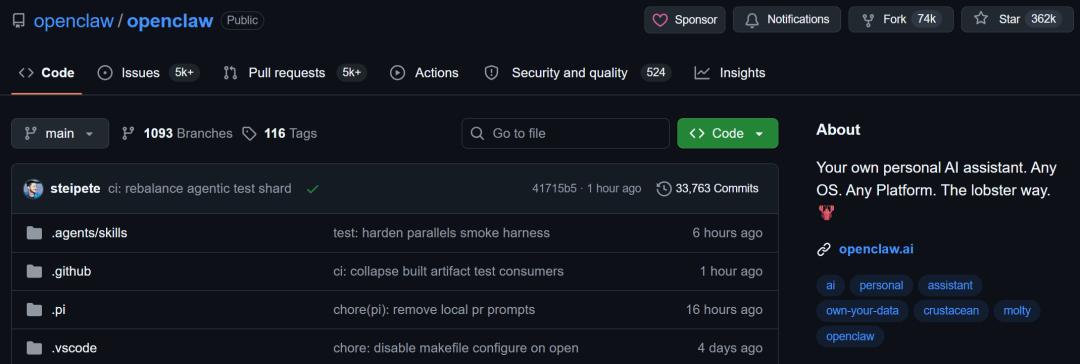
Project URL:
https://github.com/openclaw/openclaw
The problem lies in their rapid update pace. Over the past month, OpenClaw released over a dozen versions, sometimes multiple updates within a few days.
Each update risks breaking the carefully configured Agents of users.

On Reddit, users frequently post complaints, expressing sentiments like, “After the update, OpenClaw is completely broken.”
The GitHub discussion forums reflect similar frustrations, with some users creating threads to lament that OpenClaw became unusable after a particular update.
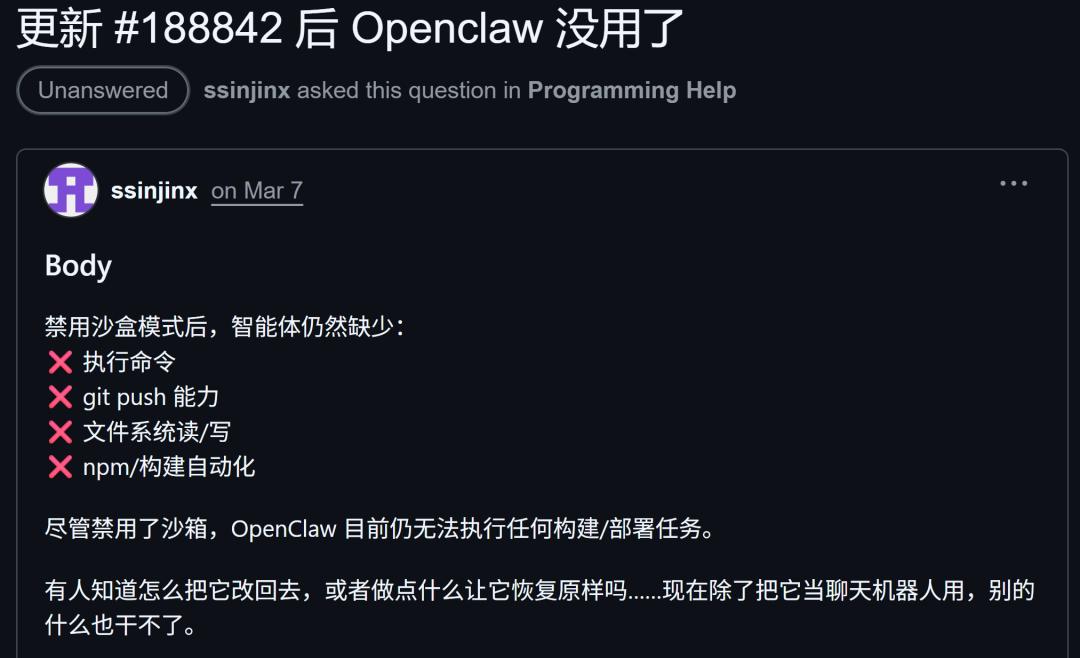
The situation is even more dire on the enterprise side. Earlier this month, maintainers discovered that major companies, including Nvidia, were still using outdated versions of OpenClaw from early March.
The hesitation to update stems from a common concern—fear of severe technical issues arising from switching to a new version.
In other words, the personal AI operating system that Huang personally endorsed is not even being used in its latest version by his own company’s products.

However, some maintainers have begun assisting these companies with migration. In the past week, a few companies initiated gradual updates, but a complete migration may still take some time.
Gustavo Madeira Santana, a neuroscience PhD student at Yale and a volunteer maintainer of OpenClaw, revealed that the team organized a “no-update week” last week, focusing solely on stability improvements without adding new features.
External Challenges from Anthropic
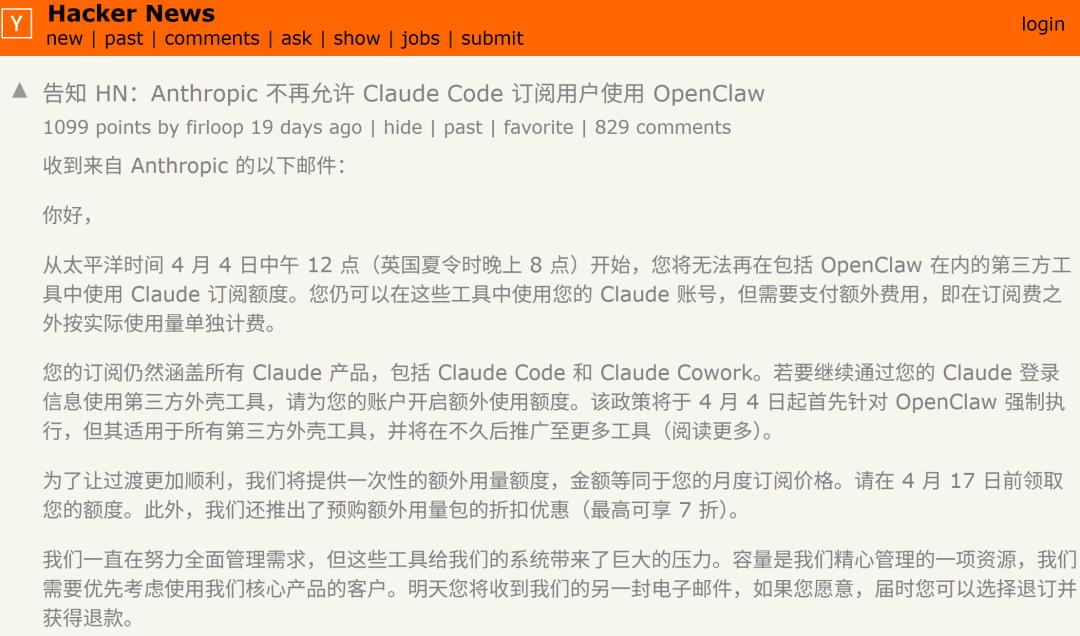
While internal technical instability poses challenges, external threats are also emerging. On April 4, Anthropic officially announced that Claude subscription users would no longer be allowed to use their subscription through third-party tools like OpenClaw.
To continue using Claude, users must switch to the API and pay per usage. Developers refer to this as the “lobster tax.”
Anthropic justified this decision by stating that the usage patterns of Agents differ significantly from regular chat interactions, and the subscription pricing does not cover the costs associated with Agent usage.
Boris Cherny, head of Claude Code, publicly explained the engineering reasons on X and emphasized that he is “a friend of open source,” even submitting several PRs to OpenClaw to optimize prompt caching efficiency.
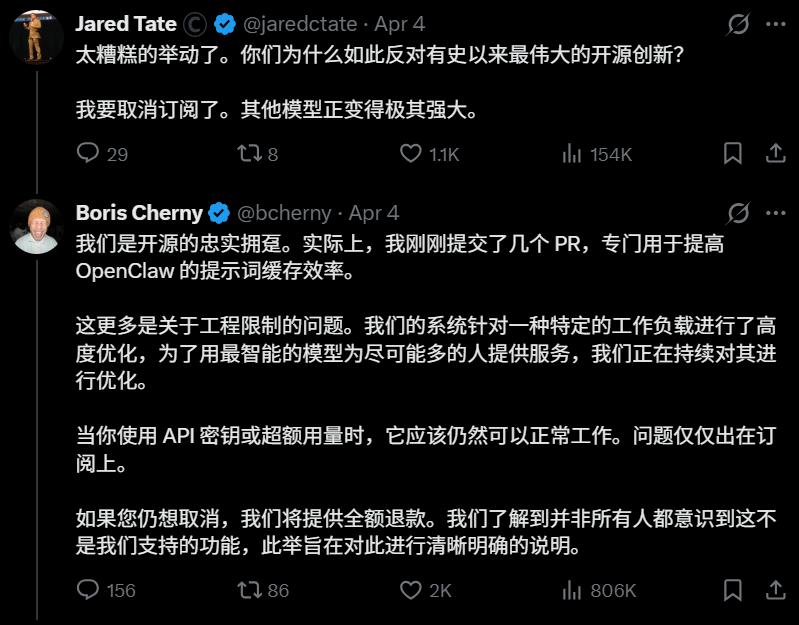
However, OpenClaw users calculated the costs. The previous $200 monthly subscription for Claude could now potentially cost $200 daily when using the API.
Peter clearly does not buy Anthropic’s reasoning. He directly criticized them on X, stating, “The timeline is too coincidental. First, they copy popular features into their closed products, then lock open source out.”
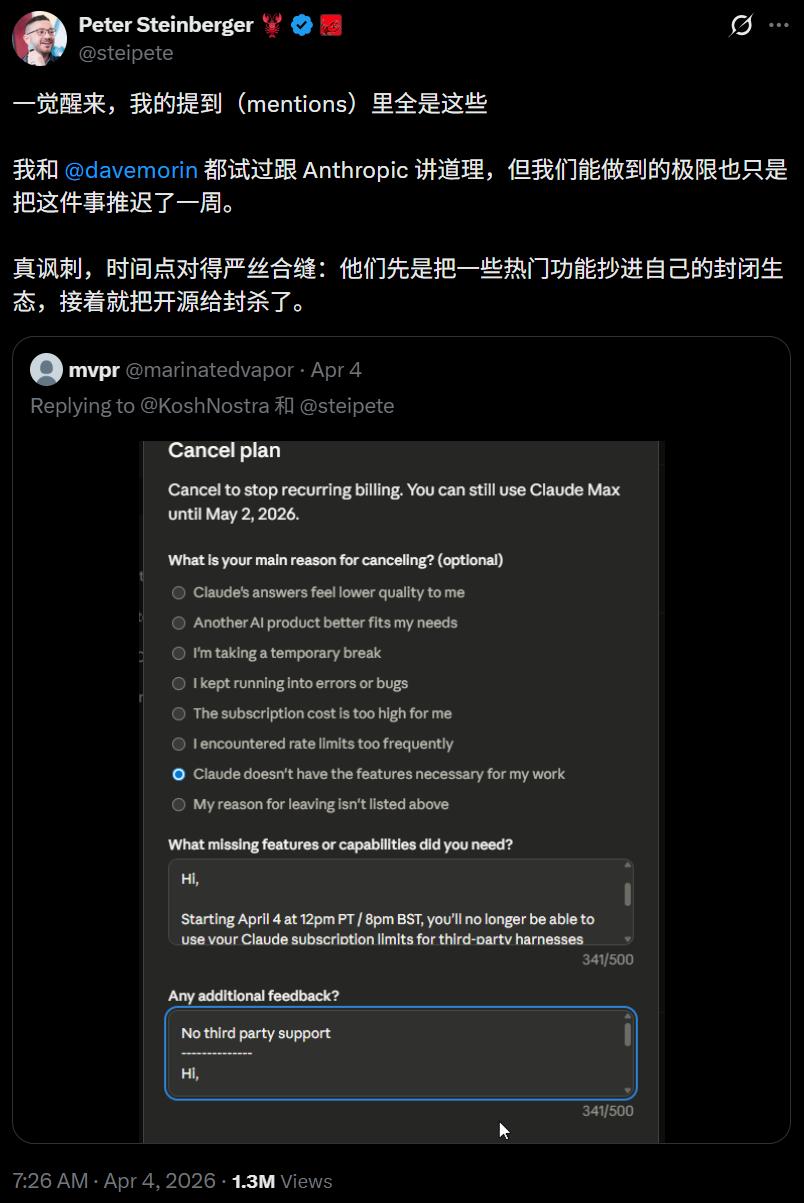
In January, Anthropic launched its own Agent product, Cowork, which overlaps significantly with OpenClaw’s functionality. In March, Cowork added a Dispatch feature, allowing users to remotely control Agents and assign tasks, which is one of the most common workflows in the OpenClaw community.
The sequence of product release followed by price changes occurred in less than a month. Yes, the timing is indeed uncanny.
Shortly after, Peter’s Claude account was suspended. He received an email in the early morning with the subject “Hello,” citing “suspicious signals” and signed by the “Anthropic security team.”
He shared the suspension screenshot on X, garnering 1.3 million views and hundreds of comments.
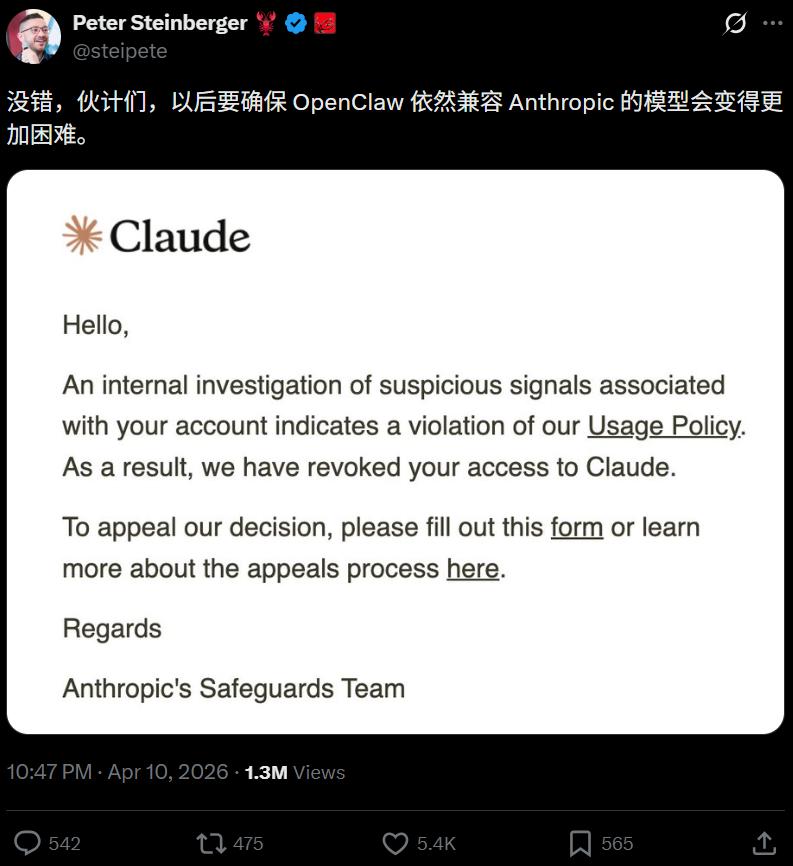
Two hours later, the account was restored. However, to this day, Anthropic has not provided any explanation for the suspension.
Competition from Hermes
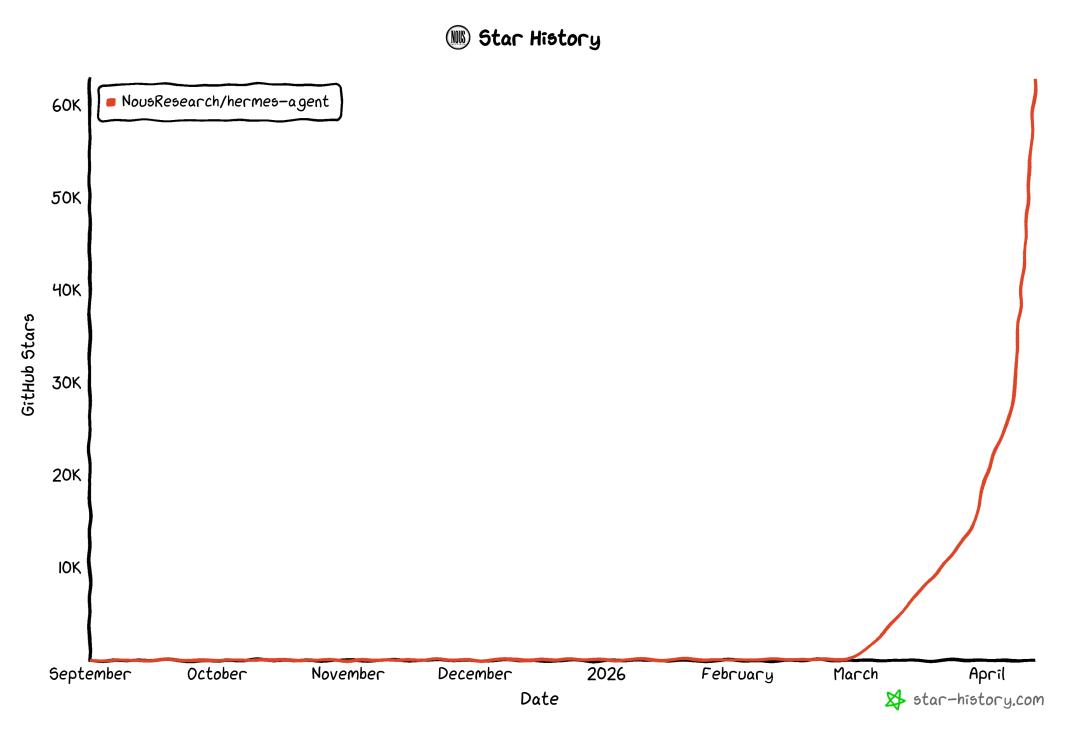
Amid internal and external pressures, competition is also intensifying. In late February, Nous Research launched its Agent tool, Hermes, which has now surged to 110,000 stars.
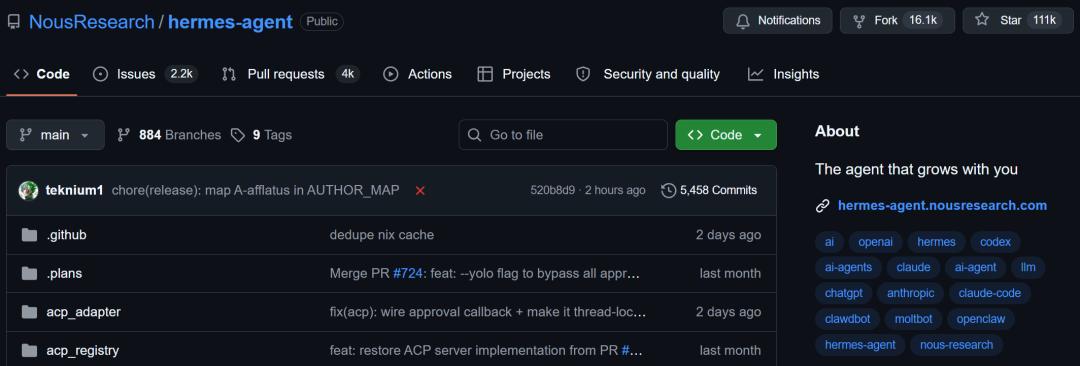
Project URL:
https://github.com/nousresearch/hermes-agent
According to ClawCharts, a website that tracks open-source Agent data, Hermes has recently surpassed OpenClaw in contributor numbers. By mid-April, Hermes’s weekly star growth rate was approximately three times that of OpenClaw.
More concerning is that Hermes v0.8.0 includes a one-click migration command called “hermes claw migrate,” allowing users to switch from OpenClaw to Hermes with a single line of code.
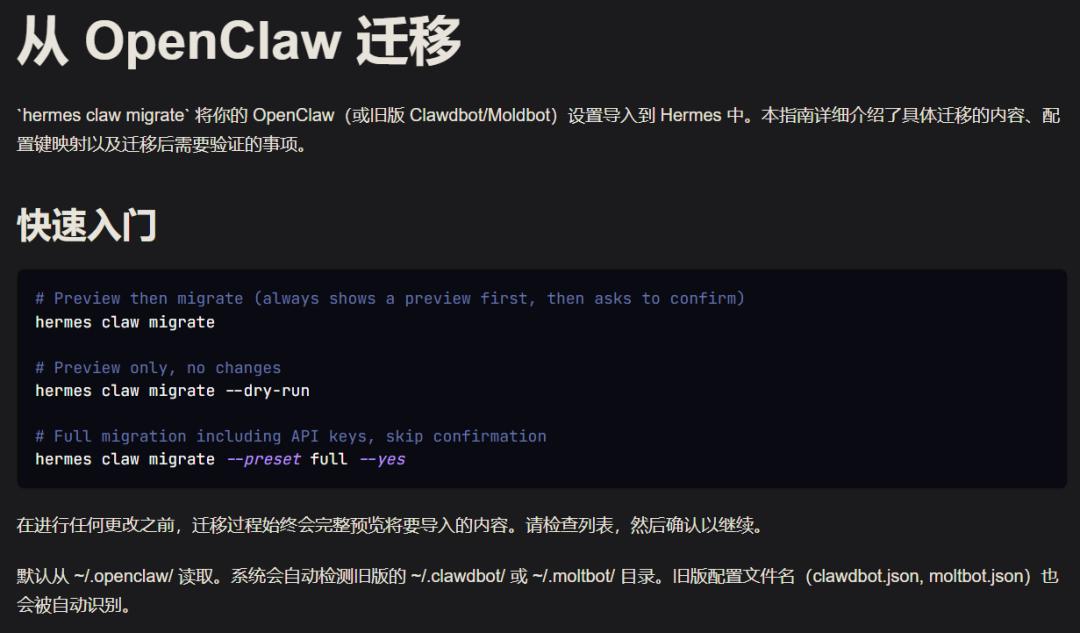
Formerly enthusiastic users are now migrating away. One user posted, “I just switched from OpenClaw to Hermes; it was the smartest decision I’ve ever made.” Another wrote, “I’m finally getting work done instead of debugging.”
Hermes has only released six versions, while OpenClaw has released 82, with three Hermes versions reportedly not even functioning. Don’t mistake fewer updates for stability.
Darian Shirazi, a partner at Gradient Ventures, remarked that OpenClaw is “too cumbersome to use,” and its security is not reassuring, prompting a shift to competitors like Town.
Honestly, aside from engineers and adventurous geeks, I don’t know who would still use OpenClaw.
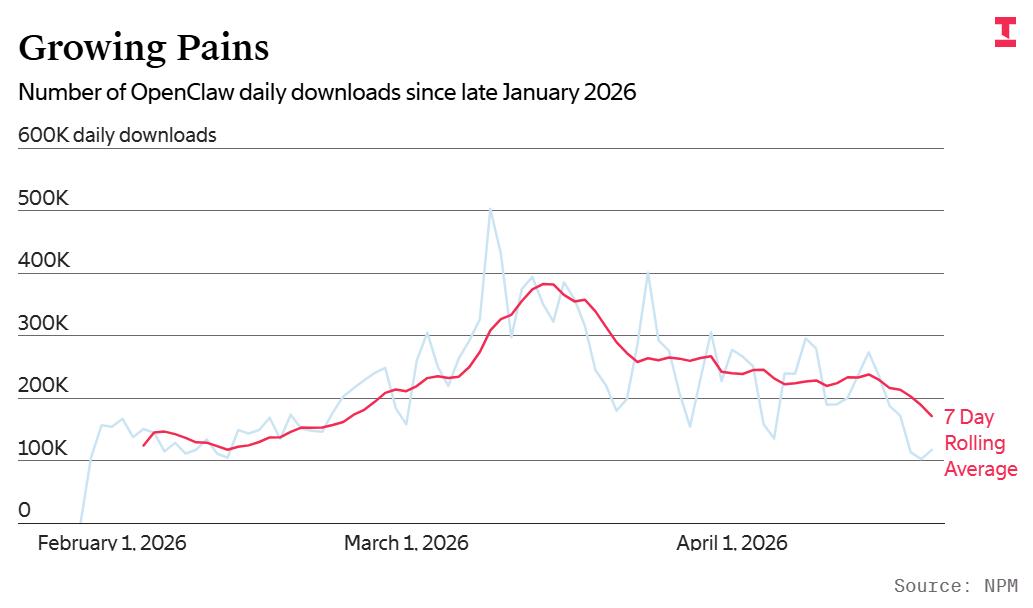
NPM download data confirms OpenClaw’s decline. Since its peak in mid-March, its average weekly download volume has halved, returning to early March levels.
Internal Conflicts Among Maintainers
All these pressures ultimately point to a more fundamental issue—an internal ideological struggle among maintainers.
One faction advocates for a traditional product development approach. They propose fixed update cycles, strict quality testing, and establishing formal communication mechanisms with enterprise users.
The opposing faction fears that such an approach could kill OpenClaw. They believe that the personal Agent category is evolving too rapidly, and yesterday’s version may need to be completely reworked today; traditional software release rhythms simply do not apply. Introducing rigid rules could stifle the fast-paced trial-and-error spirit cherished by enthusiasts.
This conflict is not unfamiliar in the open-source community. Linux, which gained popularity in the early 1990s, underwent similar growing pains, ultimately resolving the issue by introducing long-term support (LTS) versions, allowing enterprise users to confidently use a stable core architecture for years.
Shirazi suggested another approach—creating a profitable “professional version” to run parallel with the open-source version. Many open-source projects have adopted this model, leveraging commercial incentives to refine their products.
A Timeline of OpenClaw’s Journey
Reflecting on the timeline:
- January 30: Clawdbot is renamed OpenClaw, approved by community vote.
- February 14: Peter announces joining OpenAI, handing OpenClaw over to the foundation.
- March 3: Surpasses React to become the most starred software project in GitHub history.
- March 16: Huang endorses OpenClaw at GTC, stating, “Every company needs an OpenClaw strategy.”
- End of March: Anthropic begins restricting OpenClaw’s use of Claude subscriptions.
- April 4: Official price changes introduce the “lobster tax.”
- April 10: Peter’s account is suspended, garnering 950,000 views before being restored two hours later.
- Mid-April: Hermes surpasses OpenClaw in contributors. NPM download volume halves.
From being hailed as “the most successful open-source project in human history” to facing multiple challenges, OpenClaw’s journey spans just five weeks.
While Linux took thirty years to evolve from a geek toy to an enterprise cornerstone, OpenClaw has reached a similar crossroads in merely three months. However, unlike Linux, no one is willing to grant it thirty years.
Comments
Discussion is powered by Giscus (GitHub Discussions). Add
repo,repoID,category, andcategoryIDunder[params.comments.giscus]inhugo.tomlusing the values from the Giscus setup tool.