Hack (programming) is undergoing a demystification process, driven by programmers themselves.
Handcrafted code has become a “cultural heritage,” while vibe coding dominates, allowing anyone to become a full-stack developer.
Even though vibe coding was a concept introduced by Andrej Karpathy in February last year, and AI coding is still in its infancy, top AI coding tools like Claude Code and Codex have made significant strides in less than a year.
The landscape for programmers has become more polarized: top architects remain irreplaceable, while junior “code movers” are deeply entrenched in the “AI replacement” crisis.
A group of individuals is quietly benefiting from this shift. They include students with “zero programming background” and programmers, designers, and product managers who have left large companies to dive into the wave of one-person companies (OPC).
These young developers are quickly embracing AI coding, reflecting a typical disparity in technical understanding among programmers, highlighting how technology has begun to differentiate personnel levels.
Every two lines of new code on GitHub are generated by AI. Active developers on social platforms may account for less than 0.05% of monthly active users, yet they are already driving the next wave.
Recently, at a hackathon peak competition on Xiaohongshu, a group of young independent developers quickly transformed ideas into products using AI programming tools. Programming has become demystified, and creation has never been so enchanting.
Traditional Programming: Stinky Shoes, Loneliness, and Hierarchies
Chen Jinchun, a post-2000s developer, humorously refers to himself as an “old-timer” in the AI era, having personally experienced the hardships of traditional programming.
“I used to participate in hackathons, and 95% of the participants were male,” recalls Chen, a serial entrepreneur and independent developer born in 2001.
He began attending hackathons in 2021, both in the U.S. and various venues in China. “When you enter the venue, if it’s a house, the men’s shoes are piled up at the entrance, and it smells terrible.”
In the era of “traditional programming,” the logic of forming teams for a hackathon was relatively complex: you needed to gather front-end, back-end, and operations experts, with each person’s coding ability needing to be up to par.
Chen stated, “We had to specifically choose people; everyone’s coding skills had to be on point to form a team.”
Born in 2001, Chen’s sense of crisis as an “old-timer” stems from the accelerated emergence of talent under AI.
“Last year, many entrepreneurs we met were born in ‘95 or ‘97, but this year, many are already born in ‘00,” noted prominent investor and Monolith founder Cao Xi at the hackathon.
Yang Xizhe, a 13-year-old from the post-2010s generation, has taught 5 million people to memorize words through videos like “AI Vocabulary Learning” on social platforms.
He first encountered programming in second grade when his father introduced him to open-world games like “Minecraft” and “The Legend of Zelda,” sparking his desire to create his own game.
Upon learning that making games required programming skills, he started with the graphical programming tool Scratch. After finishing fourth grade, he transitioned to C++ and began competing in the National Olympiad in Informatics (NOI).
Yang has experience in hackathons and has written a lot of C++ code for the competitions.
From his perspective, “In the past, competitions mainly tested your code functionality and algorithms; in simple terms, it was about who could code better or who could code for longer.”
The style of products in previous competitions was also more rigid.
Chen remarked, “Pre-AI hackathons were more geeky, focusing on inference, with stricter requirements on products and technology, but lacking human touch.”
As the circles further generalized, the overall atmosphere changed as well.
“In some hackathons I participated in, other teams didn’t communicate, viewing each other as competitors, so there was no exchange of ideas,” Yang admitted. Previously, teams were reluctant to share ideas for fear of having their concepts stolen.
In that relatively closed world, where coding ability and endurance were the measures of worth, “creativity” became a mere accessory to engineering capability. Most products created by geeks were technically complex but struggled to reach ordinary people’s lives.
The Demystification of Technology: Everyone is a Full-Stack Developer
Programmers typically take pride in mastering difficult languages (like Rust or C++), but this elitism is being deconstructed by AI coding tools.
Chen deeply feels this shift. Born in 2001, he holds dual degrees in Computer Science and Management from MIT.
He started making money from programming early on. In 2018, during the global sneaker trading craze, he wrote a Python script that could monitor and automatically place orders for sneakers, providing “shovels” for sneaker traders and earning his first pot of gold.
After experiencing turmoil in the cryptocurrency industry, he saw greater opportunities with AI programming last year. He began using AI tools like Cursor to create interesting products.
Claude Code particularly surprised Chen.
Although he studied computer science in college, his skills aren’t that advanced. He has many imaginative ideas in his mind and sees numerous money-making opportunities. With the advent of vibe coding, he felt as if he had received divine assistance.
“For someone like me, who knows a bit about coding but isn’t an expert, this is a tremendous breakthrough. With the help of AI, I feel my abilities are comparable to those of the big shots I once admired,” Chen said.
The mystique of technology is fading. The logic of forming teams for competitions or startups has changed.
“Now, at hackathons, one person can handle everything,” Chen said. “If you want to be a successful entrepreneur in AI technology, the most important skill is marketing. You need to tell a compelling story, understand communication, and leverage information gaps between domestic and international markets.”
The preferred product style among geeks has also changed.
At the hackathon peak competition, the most attention-grabbing projects included a brainwave-controlled wheelchair, an AI hairstylist, a self-discipline headset that “shocks” you when you feel sleepy, an embodied intelligent mahjong robot, and a mechanical arm for brushing teeth and blow-drying hair in the bathroom—each with a very “unserious” creative flair.
“Most AI products now have a strong human touch,” Chen reflected. “This is the biggest difference from before.” Chen is experimenting with AI hardware products, including a self-discipline headset that contains a camera to capture user behavior. “For example, if you want to quit drinking, you get shocked when you drink.”
Chen also noted a detail from the hackathon: “There were many more female participants this time, which I couldn’t have imagined in previous hackathons.”

The increasing number of female developers participating in hackathons is largely attributed to the user structure of the Xiaohongshu platform.
Yang Xizhe, during competitions, has not experienced much of the pain of not being able to gather a full-stack team, nor has he suffered through the “stinky shoes piled at the entrance” of venues.
He enjoys the vibe of the process.
Once, at a hackathon, when he successfully ran a product function, his teammates described him as being as happy as a monkey.
He even likened vibe coding to playing games: “When playing games, everyone feels happy and doesn’t think about time stopping; for me, vibe coding is the same as playing games.”
Yang is moved by the atmosphere of the current developer community. “Many teams are our competitors, but they still encourage us, wishing us to make it to the Top 10 and to continue developing our projects. Everyone is genuinely kind.”
This time, Yang’s team, consisting of three other middle school students, completed a popular note diagnosis agent system in less than 24 hours.
Xian Xinglang, a high school student born in 2008, is another student developer who has received strong positive feedback from AI programming. Last year, his first app—an AI healing application called EmoEase—reached fifth place on the App Store’s paid chart.
Before engaging in AI programming, Xian’s daily routine consisted of school, homework, and watching videos. Due to student council work, he used Cursor to develop a website showcasing student activities. He began to taste the sweetness of AI programming and dove in.
His personal experience reflects a turning point not only from learning AI programming skills in online communities but also from the positive feedback among independent developers, including Manus founder Xiao Hong.
Before EmoEase was launched, Xian discovered that as an individual developer, he needed to pay an annual fee of 688 yuan for the app, which posed a challenge for him without a fixed income. He reached out for help in the developer community, and Xiao Hong saw the message, directly covering the annual fee and expressing encouragement.
“After getting into AI programming, on one hand, I received positive feedback from others; on the other hand, I genuinely immersed myself in the independent development process, which was very enjoyable. This was a significant transformation in my life.” Now, after school, Xian’s first task is to open his computer and develop, often neglecting his homework.
The New “Three Axes”: Creativity + Communication + Empathy
In the pre-AI era, the strength of programming skills was a key factor in dividing the geek hierarchy. In hackathon competitions, they competed in coding speed, algorithm proficiency, and team composition (which had to include both front-end and back-end).
In the vibe coding era, the key to winning has shifted to ideas (creativity) and marketing (narrative/communication).
“Vibe coding has really changed a lot,” Yang candidly stated. “Now at hackathons, the starting point determines the outcome of the competition. The main thing is to have a good idea; as long as you refine the code afterward, you might win. If you write a lot of code but it lacks commercial value, or if your idea is ordinary and overlaps with others, you won’t win, even if your coding skills are solid.”

In the AI programming era, creativity and communication have become the core competencies of programmers, as exemplified by the embodied intelligent mahjong robot that drew significant attention.
Chen’s assessment is even more radical: “There are no barriers to creating applications now. The competitive point in the AI era is not about how advanced the technology is. It relies on soft skills—finding your product’s audience and highlighting your differentiation and breakthroughs.”
He even believes that in the future, content created by AI agents will account for over 90% of the internet, making real human IP increasingly valuable. By using their real IP to authorize AI-generated content, the cost approaches zero.
Thus, Chen has set his only goal for this year: to build a personal IP.
He no longer pursues long-term product development. With significant updates to AI models or products occurring weekly or even daily, the uncertainty of what developers can create increases. A product that took half a day to develop with old tools could be instantly surpassed by new tools.
Therefore, the only thing he is certain about is to focus on building his personal IP. The best way for him to achieve this is through vibe coding, creating projects that are fun, humorous, and capable of generating buzz. “If people find the project entertaining, the IP will naturally spread.”
For some developers, the rapid pace of technological iteration means that instead of chasing one trending concept after another, it is better to focus on “people” and creativity. This approach may be more sustainable for independent developers in the AI era than pursuing specific projects or entrepreneurial directions.
In the future, if agents can exchange value themselves, then today, we can still exchange ideas and joy.
Yang Xizhe, still in middle school, has a slightly different perspective, but the core remains the same.
He is willing to try new trends but prefers to first identify real pain points in life: “If a product cannot solve a user’s real pain point, it is basically meaningless unless you are just making it for fun. Products that address user pain points hold commercial value, and users may be willing to pay for them.”
He observes the worries of his peers—academic pressure, screen time, information overload—and subconsciously thinks, “Can this be turned into a product?”
Yet, they all retain some geeky essence—an intrinsic drive, with interests often being niche but professional, typically in technology, science, anime, or gaming, driven by internal motivation rather than external demands.
Although they are deep users of social platforms, keeping an eye on market demands and emotional trends, Chen admits, “I rarely look at the comments section and change things based on what others say. The projects in vibe coding are driven by interest; without that, it’s hard to keep going long-term.”
Yang also acknowledges that while surfing the internet, he prioritizes content tagged with OpenClaw, vibe coding, or hackathons, avoiding videos unrelated to technology.
However, he continues to study traditional algorithms. He pays attention to algorithm and traditional programming content. Although traditional programming is becoming less applicable, he finds that the way of thinking and logical reasoning is still worth learning in the vibe coding era. “That’s why many adults, despite being around the same age as us post-2010s, still write better prompts than we do.”
Beyond Coding: Computational Power Remains a Real Divide
Vibe coding is not a magical solution.
Chen complains that the biggest barrier with Claude Code is the limited tokens available. Yang has also found that “OpenClaw consumes tokens rapidly; if paired with a good model, it can cost thousands in one night.”
Another awkward reality is that the most advanced AI coding tools are constrained by network issues, preventing most domestic developers from using them smoothly. For student developers like Yang, the credit card payment model is also a significant barrier, making it difficult to spend money even if they want to.
Products born from vibe coding tend to be relatively rough, which is a shared consensus. The downside of developers relying too heavily on vibe coding is that they may overlook the rigor and safety of product engineering.
Nevertheless, programmers understand that it is difficult to return to the “classical programming” era.
GitHub disclosed data in January showing that AI-generated code (i.e., code completed with the assistance of GitHub Copilot) accounted for 46% of total user submissions.
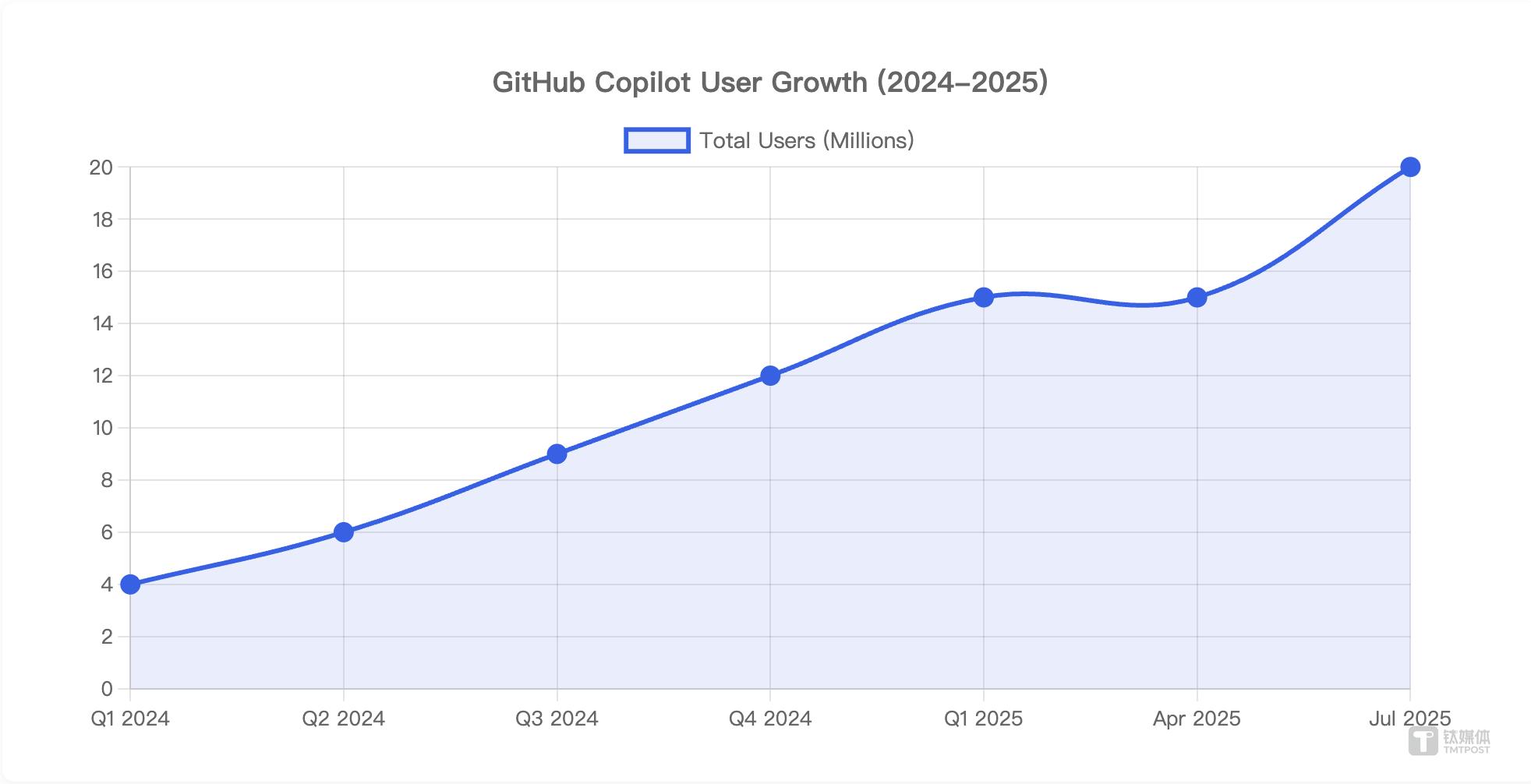
This figure has risen significantly from 27% when Copilot was first launched in 2022, indicating that generative AI has deeply integrated into the development process.
The information disclosed that Anthropic’s Claude Code achieved an annual revenue of $2.5 billion by February this year, less than nine months after its launch.
Meanwhile, OpenAI announced that Codex (set to launch in April 2025) has surpassed 3 million weekly active users (WAU). By April 2026, OpenAI’s enterprise business is expected to account for over 40% of total revenue, with Codex’s application in the enterprise sector being a significant driver of income. OpenAI has even chosen to shut down the once-popular revolutionary product Sora to focus on competing with Anthropic in this field.
The individual stories of these independent developers reflect a more profound structural change in the capabilities of the new generation of developers.
The transformation of post-2000s Chen Jinchun is not an isolated case. It represents a collective choice among a group of “semi-technical background” developers: as programming barriers are lowered by AI, personal IP is seen as the deepest moat.
Meanwhile, 13-year-old Yang Xizhe and 18-year-old Xian Xinglang instinctively grasped the two core elements of the vibe coding era: personal interest-driven and addressing real user pain points. These are precisely the skills that many seasoned programmers have had to relearn in the wake of the AI wave.
AI coding makes creation accessible and collapses the barriers of programming technology, bringing creativity, empathy, and storytelling to the forefront.
Two years ago, Xiaohongshu, which started as a lifestyle community, had no vertical category for “technology.” In the past year, due to the rise of trends like vibe coding, technology content on Xiaohongshu has grown significantly, becoming one of the fastest-growing verticals on the platform, with over 100% year-on-year growth and a creator scale increase of over 200%. More than 160,000 developers are active, with a year-on-year growth of 220%, and 90% have launched more than one product within a year.
Gartner predicts that by 2028, 90% of programmers will use AI programming tools, a significant increase from less than 14% in early 2024.
This model of “real human IP + AI tools” is becoming a new entrepreneurial norm. The concepts of “super individuals” and “one-person companies” (OPC) are emerging from this.
However, it remains challenging to determine whether the enthusiasm for development ignited by vibe coding will become the main theme of the AI industry or if it is merely a small slice of this larger tide.
One of the most impressive moments during the event’s roadshow came from the project presentation titled “When Haircuts Meet Token Limits.” When asked how the team planned to address the workload pressure during AI image generation, a team member proudly stated, “We have nearly 2 million GPUs at our disposal,” expressing immense gratitude to Shanghai University of Science and Technology for providing them with 8 H20s as support, enabling them to solve the load balancing issue.
Eight H20s? This has already made this young team incredibly excited.
In a world where GPUs are dubbed the “new oil” or even the “new dollar,” while Silicon Valley debates B200 and thousands of card clusters, the reality is that H20 has become one of the hottest currencies in the AI circle, representing one of the strongest computing powers available through legal channels.
Perhaps this is the real survival landscape for domestic developers. And computational power remains that invisible ceiling.
Comments
Discussion is powered by Giscus (GitHub Discussions). Add
repo,repoID,category, andcategoryIDunder[params.comments.giscus]inhugo.tomlusing the values from the Giscus setup tool.